





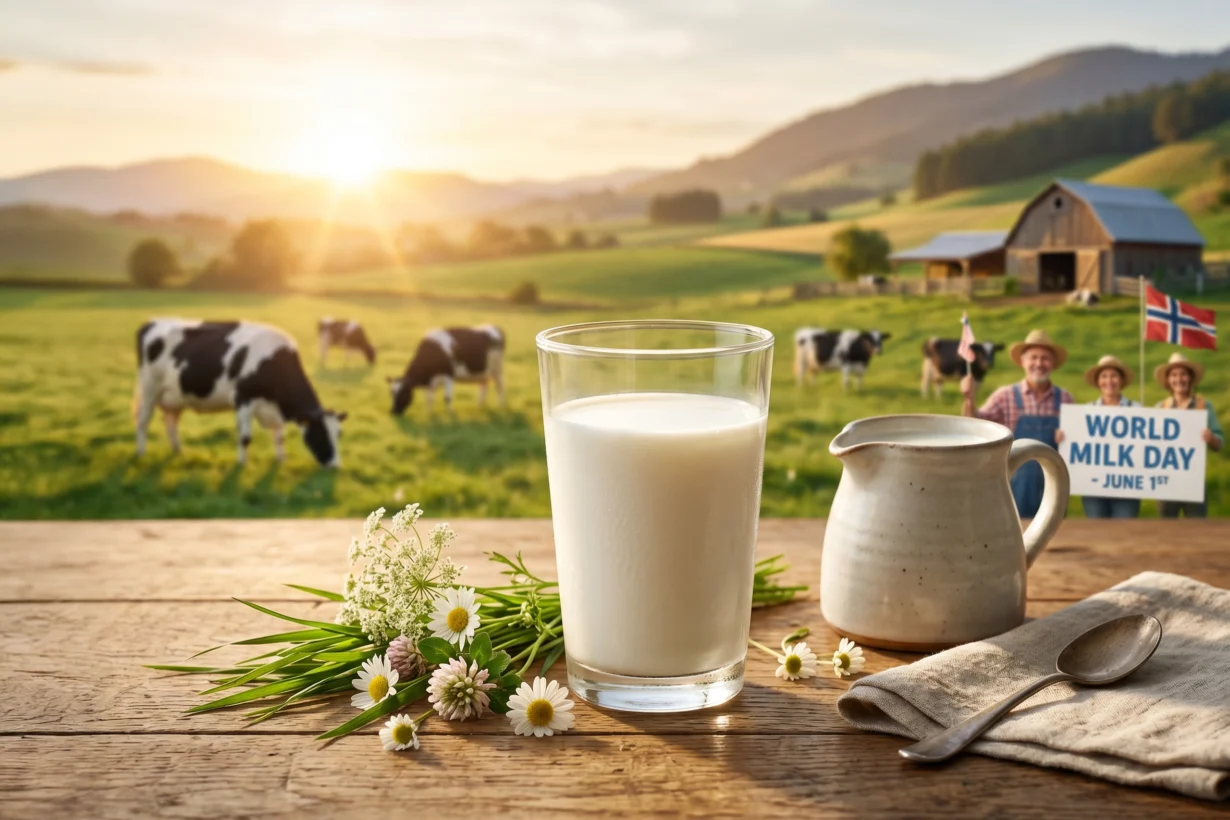
Every year on June 1, people around the world celebrate World Milk Day, a global observance dedicated to recognizing the importance of milk as a nutritious food and highlighting the role of the dairy industry in supporting livelihoods, nutrition, and sustainable agriculture across the world.
For many, milk is a simple daily staple—poured into morning tea, added to coffee, enjoyed with cereal, or used in cooking. But behind this familiar ingredient lies a much larger story: one of agriculture, nutrition, economic development, and cultural tradition.
World Milk Day reminds us that milk is more than just a drink. It is a vital source of nourishment for millions and a cornerstone of food systems worldwide.
When Is World Milk Day Celebrated?
World Milk Day is observed every year on June 1.
The date was chosen to create a unified global celebration after many countries were already recognizing milk and dairy awareness events around this time of year.
Today, farmers, schools, food organizations, and dairy producers across dozens of countries mark the occasion through educational campaigns, public events, and nutrition awareness activities.
The History of World Milk Day
World Milk Day was established in 2001 by the Food and Agriculture Organization (FAO), a specialized agency of the United Nations.
The goal was simple but important: to highlight milk’s global significance as a food source and to celebrate the contributions of the dairy sector to nutrition, economic development, and food security.
Milk has played a central role in human diets for thousands of years. Ancient civilizations relied on dairy products for sustenance, and over time milk became deeply woven into culinary traditions across cultures—from yogurt in the Middle East to cheese in Europe and milk tea in South Asia.
The creation of World Milk Day gave countries around the world a shared opportunity to recognize dairy’s role in both traditional and modern food systems.
Why World Milk Day Matters
Milk remains one of the most widely consumed foods globally.
It provides essential nutrients including:
- Calcium for strong bones and teeth
- Protein for muscle growth and repair
- Vitamin B12 for healthy nerve function
- Potassium for heart health
- Vitamin D (when fortified) for calcium absorption
For children in particular, milk can play a crucial role in healthy development.
Beyond nutrition, dairy supports millions of livelihoods worldwide.
From small family farms in rural communities to large-scale dairy industries, milk production contributes significantly to employment, local economies, and agricultural sustainability.
World Milk Day also opens conversations about:
- food security
- sustainable farming practices
- responsible dairy production
- innovation in nutrition
How World Milk Day Is Celebrated Around the World
Different countries observe World Milk Day in unique ways.
In India, where milk is deeply connected to both daily life and cultural tradition, schools and dairy cooperatives often organize educational events and nutrition campaigns.
In parts of Europe, dairy organizations host farm tours and public awareness programs to help people understand where milk comes from and how dairy farming works.
In United States and Canada, social campaigns often highlight dairy nutrition and sustainability efforts.
Across social media, people share recipes, dairy facts, and stories celebrating local farmers and milk-based traditions.
Ways to Celebrate World Milk Day
You don’t need to work in agriculture to celebrate.
Here are simple ways to take part:
Learn about dairy farming
Explore how milk reaches your table and the work farmers do every day.
Try milk-based recipes from around the world
Experiment with dishes like:
- Indian masala chai
- Italian panna cotta
- Greek yogurt bowls
- Mexican arroz con leche
Teach children about nutrition
Use the day to discuss healthy eating and where food comes from.
Support local dairy producers
Buying local dairy products helps farming communities thrive.
Share awareness online
Posting facts and stories helps spread understanding of milk’s global importance.
Interesting Facts About Milk
- Humans have consumed milk for over 8,000 years.
- More than 6 billion people worldwide consume milk and dairy products.
- Cheese is one of the oldest processed foods in history.
- Some cultures consider milk a sacred symbol of nourishment and purity.
- Dairy farming supports hundreds of millions of livelihoods globally.
Frequently Asked Questions
Who started World Milk Day?
The FAO of the United Nations established it in 2001.
Why is World Milk Day celebrated on June 1?
The date aligned with existing milk-related celebrations in several countries.
Is World Milk Day only for dairy farmers?
No. It celebrates milk’s role in nutrition, culture, and food systems for everyone.
Can schools celebrate World Milk Day?
Yes. Nutrition lessons, farm education, and healthy recipe activities are popular ways to observe it.
A Day to Appreciate Everyday Nourishment
Milk is often so familiar that we rarely stop to think about its journey—from farms and communities to kitchens and cultures around the world.
World Milk Day offers a chance to reflect on how something so ordinary can also be extraordinary: nourishing people, sustaining livelihoods, and connecting generations through food traditions that span centuries.
Every glass tells a story worth celebrating.